

Reacting every day instead of two or three times a year
“You can't steer what you don't measure.”
Dr. med. Ahmad SirfyFacharzt für Allgemeinmedizin, SmartPraxis München
“We used to have the numbers too, but it took a lot of effort. We always had to fill in Excel spreadsheets and have charts made. I could often see these numbers only two or three times a year, not every day. Sometimes it was too late to react. Now I can react every day. You don't make important decisions on gut feeling alone, but when you know your numbers and facts. That is what MediPulse gives me.”
- QuestionWho are you, and who works in your practice?
We are SmartPraxis in Munich. My name is Ahmad Sirfy, and I am a specialist in general medicine. Altogether we are six doctors: I work with colleagues from internal medicine and general medicine, plus doctors in residency training.
On site we have four assistants: two medical assistants (MFA), one primary care manager (PCM) and one physician assistant (PA). Two more people work with us in management and customer service.
- QuestionWhat stands out to you in everyday practice when you look back over the last months and years?
I have been in this practice for eight years, and since then I have been learning every day that I am not only a doctor but also an entrepreneur. That changes quite a lot. You are an employer, you don't just have medicine on your mind but many other things, and all of it has to fit together every day.
- QuestionWhat exactly is changing when you compare 2024, 2025 and 2026?
Quite a lot is changing right now, especially this year, and next year even more will change. Politicians have made important decisions. For us that means we now have a few months to react, and next year we will simply have to run the business differently. That is the reality.
Laws change, politicians keep coming up with something new, and the conditions are changing massively. We have to adapt. Unfortunately we often have to react instead of acting, but we also have to think ahead. Every entrepreneur knows that.
- QuestionAre expectations of practices changing too, in terms of profitability and digitization?
Absolutely. Running a practice today is not what it was a few years ago. You have to look at your numbers much more and work much more economically. And you have to bring your team along and show them what it is actually about: what numbers do we have, and how do we work together? When the team understands that, we can change things together.
- QuestionWhat role does digitization play in this?
You are asking the right person. We live digitization; we are not called SmartPraxis for nothing. For us it is a matter of course. We work more efficiently, but we also meet patients where they need to be met. They work together with us. So we are not only a team among ourselves but together with our patients, and that is how we work more efficiently.
- QuestionYou work with your patients in a very digital way. What does that mean economically?
We make very full use of digitization. As a result our processes are so efficient, and our team has become so efficient with them, that we need far fewer staff than other practices. Economically, that is of course interesting.
The question is: what does digitization mean? It is not just about digital tools but about the best tools on the market and the best processes. For me, digitization means standardizing and automating processes. And that is exactly what we notice day to day: we need far fewer staff than other practices.
Practices normally work with two to three medical assistants per doctor. With us it is exactly the other way round: we have fewer than one medical assistant per doctor, around 0.9. That is what sets us apart, and that is digitization that works.
- QuestionDo you see the difference in your numbers too, compared with the past and with other practices?
I know my numbers, but I also know the numbers of other practices; you pick that up in advisory situations. We work considerably more economically and are more relaxed as a result, because we work so efficiently. We have worked as digitally as possible here since day one, but we have never had a medical-assistant ratio as good as now.
Above all, our medical assistants do not only do administration but real treatments too. That is the future: a good medical assistant becomes a provider of care. That works as far as politics allows it, and with the practice-patient contact, which under some GP-centered care contracts a PCM can provide instead of the doctor, it is now possible. When the processes are good, medical assistants no longer have to read in cards and register patients; they can take part in the medicine.
- QuestionYou are a doctor and an entrepreneur. How do you bring the two roles together?
Good question, I would probably have to ask a psychologist. In the end, for me it is this: I want to deliver good quality. I want to practice good medicine, and that medicine has to stay affordable every day. That is my job.
As an entrepreneur I motivate my team to practice good medicine with the resources we really have. That works, but it is not easy. I can't separate the two and say: now I am an entrepreneur for half an hour and a doctor for the next hour. I am a doctor and an entrepreneur every minute.
- QuestionHave the improved processes given you more time for your patients again, to be more of a doctor?
Absolutely. Since my first day in this practice my goal has been to have more time for people. And by people I mean the patients, but also ourselves, the practice team. We now have more time for treatment and for medicine. With our processes we push administration further down almost every day.
You can already see it in how we treat patients today: we have more time to listen, to talk and to examine, and we save a lot of time on administration and documentation. That is good digitization.
- QuestionWhat does MediPulse give you that you did not have to this extent before? And why did you choose it?
At SmartPraxis we have goals, and the whole team carries them. They come out of campaigns and staff reviews. But the goals also have to be, and stay, visible to everyone. We do that with MediPulse: we define our goals, make the numbers transparent and visible every day, and can steer towards those goals.
Because you can't steer what you don't measure. And now we can measure it, thanks to MediPulse.
- QuestionHow do you use MediPulse day to day to keep an overview?
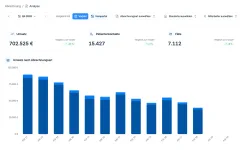
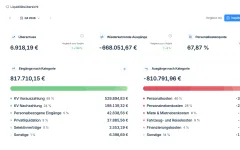
As an entrepreneur I can look at it at any time. I have my dashboard, I have my numbers, and I understand quite a lot at a glance.
For example, we run campaigns, and we set goals for them. At the end we can measure and see straight away whether we were successful or not. We also agree goals with our staff and can track them thanks to MediPulse, including in the quarterly reviews: we talk every three months and can then check the goals together.
- QuestionHow did you do this before, and what has changed?
We used to have the numbers too, but only with a lot of effort. We always had to fill in Excel spreadsheets and have charts made. I could often see the numbers only now and then, two or three times a year, not every day. Sometimes it was then too late to react. Now I can react every day. That is wonderful.
- QuestionHow was it when you founded your practice? Were you aware from the start how much entrepreneurial work it involves?
I made the decision to set up in practice consciously. Even as a doctor in residency training I looked at other practices and always wanted to see their interim financial statements (BWA). At first I understood nothing of them, but over time I developed a feel for what it means to run a practice and what entrepreneurship means in this field.
Even so: although I felt very well prepared for setting up, in the end I was overwhelmed. By so much bureaucracy and by so many numbers that I had to keep track of. To be honest, I underestimated that at the start, but I learned to deal with it.
One thing was always important: if you only react on feeling, it does not necessarily lead to anything good. You have to react according to a plan, and for that you need good numbers. It was a journey: understanding and learning how I can have my numbers at any time and how I can understand them.
As an entrepreneur I have to make decisions every day. And I have learned: you don't make important decisions on gut feeling alone, but when you know your numbers and facts. That is what MediPulse gives me.
- QuestionHow do you communicate financial goals to the doctors you employ, and how does MediPulse help you with that?
That is a problem many doctors know: you can't get people motivated for revenue targets. We communicate very openly and transparently with our staff, especially with the doctors we employ. They want to practice medicine, and yet it is important to always keep in mind how we work economically. We need that; after all, we are a business too. We show the numbers and the goals we set, before and after.
In a staff review it is important that everything is understandable and that the overview really is accurate. That is where we agree goals, for example quarterly goals. After three or four months we sit down together again, look at the numbers and ask: where were the problems? Or: wow, well done. Sometimes we celebrate that together, too.
Sometimes we also set goals for the whole team and say: if we reach them, there is breakfast on me, and in return I sit at the front desk myself and keep the practice running. I did that recently. Everyone was at breakfast and I got to staff the front desk. The team won the bet, and that was a good thing.
What matters is this transparency: that the staff can understand at a glance every day whether they have reached their goals and where they stand. That is a completely different feeling of motivation.
Medical assistants per doctor
Dr. Sirfy attributes this to digitizing his processes as a whole, not to any single tool.
How often the numbers are on the table


See for yourself what MediPulse can do.
Try MediPulse with no obligation and see how data and automation give you your time back.